
Jackson County City Directory Collections
The Midwest Genealogy Center guide is the most practical shelf list for a Jackson County historical-directory search. It is a holdings guide, not a promise that every annual issue survived. The guide says dates can be incomplete and entries may not sort perfectly. Start with the city label printed on the record, then request the listed roll, fiche, title, and page. Kansas City and Independence are not interchangeable series, and a county address can appear under a different community label in another year.
| Directory collection | Years listed | Where held | Access route |
|---|---|---|---|
| Kansas City directory microfilm and fiche | 1859–1860; 1860–1861; 1861–1935 | Midwest Genealogy Center guide | Ask for the exact roll or fiche and page |
| Kansas City later directory reels | 1936–1942; 1945–1961; 1966–1978; selected 1980s years | Midwest Genealogy Center | Confirm year, title, and name or street section |
| Independence directory and phone holdings | Selected 1911–1960 directory years; selected later phone years to 2001 | Midwest Genealogy Center | Use Independence first, then follow the guide’s Kansas City cross-reference |
| Blue Springs, Lee’s Summit, Greenwood, and Raytown phone holdings | Selected late twentieth-century years through 2001 | Midwest Genealogy Center | Search the precise community and its service-area label |
| Kansas City Negro City Directory | 1942–1943 | KCPL Missouri Valley resources | Digitized access and repository article |
The dates describe what MGC lists, not a complete publishing history. A gap can mean a missing reel, a different city edition, an uncataloged title, or an issue held elsewhere. A printed volume is a dated observation, not a current registry.
Jackson County Directory Shelves
Midwest Genealogy Center in Independence directs researchers to its Jackson County records-on-microform guide and Missouri directory guide. Print directories and phone books are cataloged online, while some microfiche and microfilm are not. Staff can arrange a microform loan from another library, historical society, or the Library of Congress to MGC or another Mid-Continent branch with a reader. The owning institution may charge a fee.
The MGC Jackson County collection guide covers material dated 1894–2001 in five boxes, including Independence, Kansas City, Raytown, schools, ephemera, and student directories. It is a collection-level lead, not a claim that a file exists for every name or street. Ask for a finding-aid, box, folder, reel, or fiche identifier. That request gives a later researcher a traceable starting point.
MGC’s collections page is the official route to the directory and microform guidance.
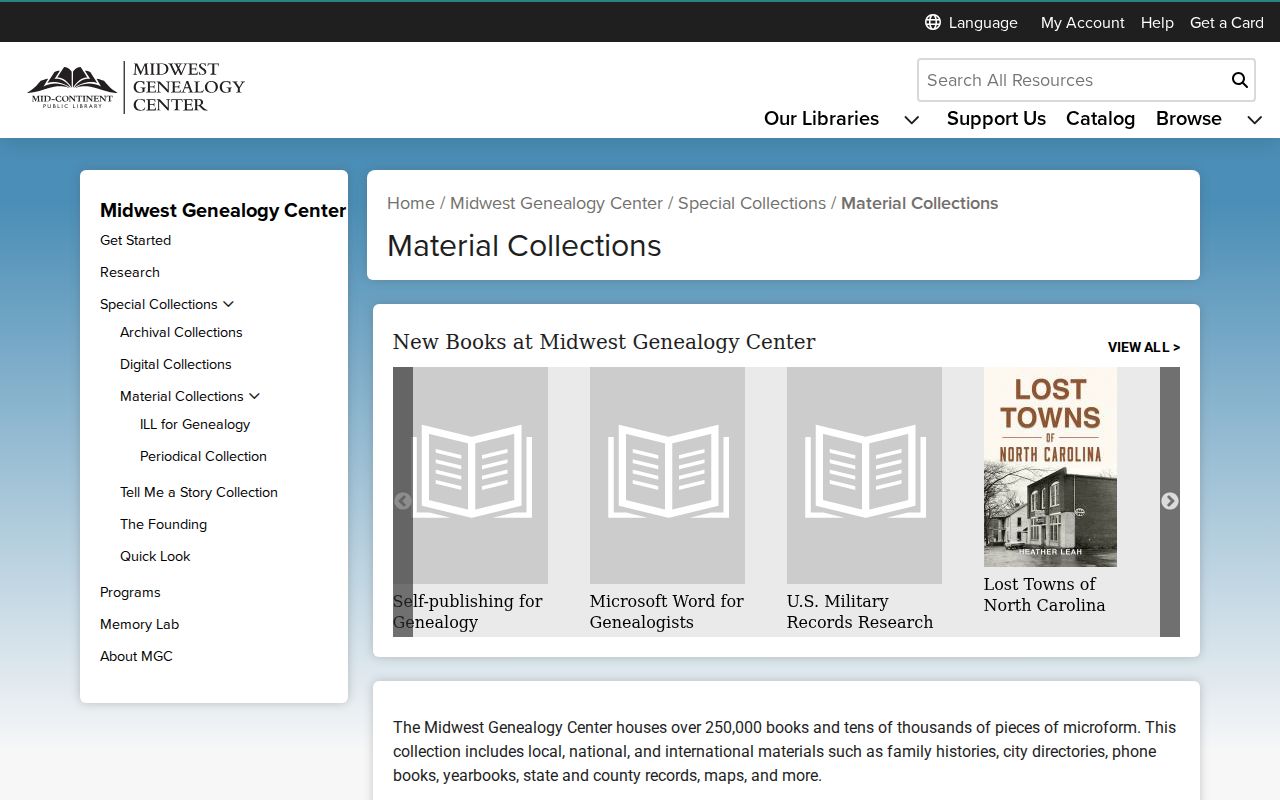
The collection page points toward the guides and reader-based access that fill the gaps left by a web search.
Jackson County Digital Directories
Kansas City Public Library’s KC History brings together a digital gallery and Local History Index from Missouri Valley Special Collections. Its local-history resources include directories, maps, yearbooks, oral histories, and the 1940 Tax Assessment collection. The Kansas City Star and Times page-image archive can corroborate a move, notice, family event, or neighborhood reference, but OCR should be checked against the scan and library-card or subscription conditions can apply.
MGC digital collections also identify Jackson County and Kansas City plat books from 1886–1925 with name indexes and images through a collaborative Missouri Digital Heritage, State Archives, and FamilySearch route. A plat can connect a subdivision or tract to a directory street label, but it does not establish a household at the address. Use the title, sheet, date, and legal-description clue when comparing a plat to a later parcel.
The historical directory sits alongside map and assessment evidence, not above it. A printed address may be a strong lead for a house-history question, yet the legal description and parcel should be compared before a modern street number is assumed to match. Modern address-keyed work belongs with the Jackson County street directory records and parcel workflow.
KC History provides the local-history index and gallery that support a directory lead.
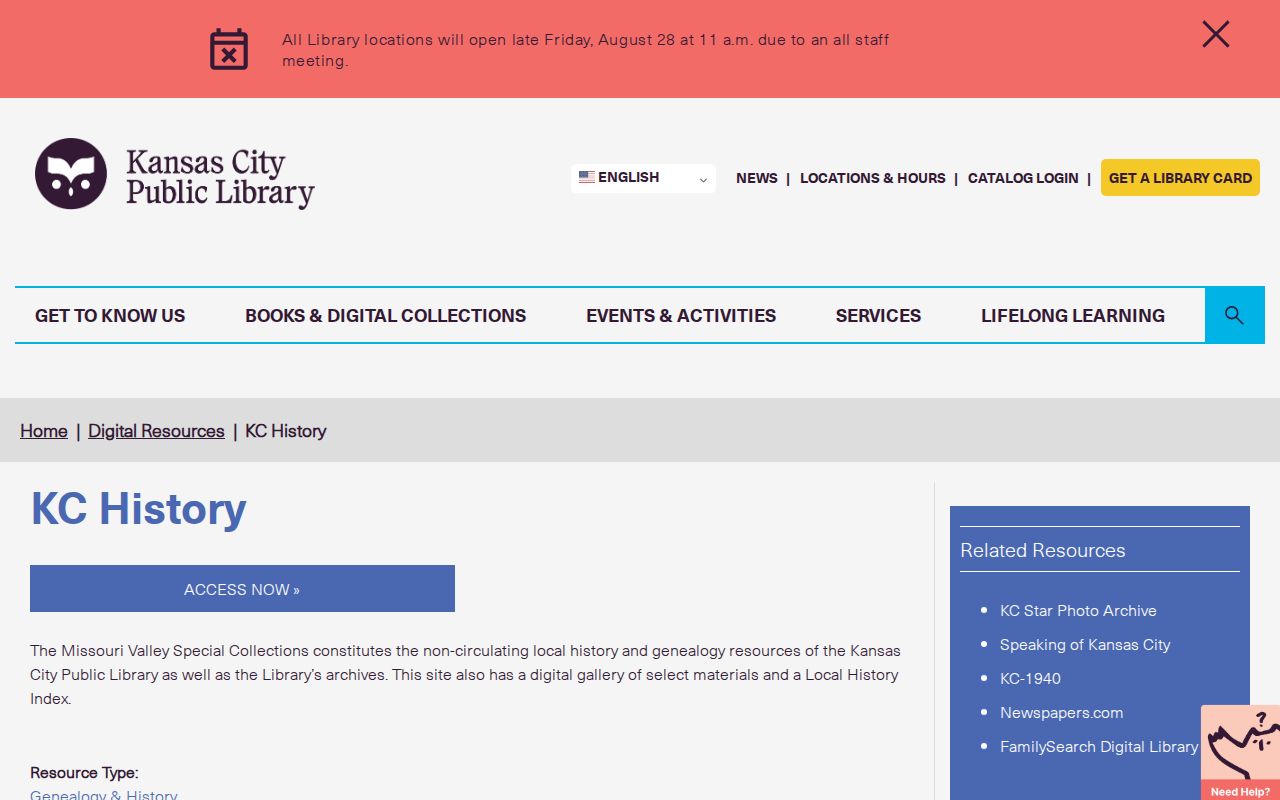
The library interface is a discovery point. Preserve the item title, year, repository, and page image citation when a result is used.
Read a Jackson County Directory Entry
Read the abbreviation legend before interpreting a Jackson County city directory entry. The KCPL description of the 1942–1943 Kansas City Negro City Directory identifies two complete A–Z listings of names and businesses, a supplementary list, categorized business listings, addresses, telephone numbers, advertisements, and an abbreviation legend. Its illustrated example shows how a household role, a public-service role, a street address, and a spouse reference can appear together. It is a demonstration of field types, not current information about the person shown.
| Name form | Surname-first order, initials, or a business name may be the entry point. |
|---|---|
| Household marker | Spouse or relationship wording can help distinguish similar names when read with the year and address. |
| Street line | House number, street abbreviation, rural route, or post-office label should be copied exactly. |
| Telephone or business listing | A listed number or category is a dated lead and may not appear for every household. |
| Publication detail | Year, publisher, page, neighboring entries, and the abbreviation legend make the citation checkable. |
- Criss-cross section
- A street-order listing that begins with an address rather than a name. The inspected MGC guide did not identify a confirmed Jackson County run, so ask staff to verify one.
- Householder index
- A name arrangement centered on a household head or listed household reference, depending on the volume.
- Abbreviation key
- The legend that defines the volume’s shortened labels. Photograph or transcribe it before relying on a mark.
Jackson County Directory Gaps
Not everything is online, and a library catalog result is not the same as a page image. Some nineteenth-century deed books remain microfilm research; some directory material needs an MGC reader; and Jackson County Historical Society holdings depend on donations. A no-hit can reflect a spelling variant, a different city label, a skipped publication year, a missing volume, an unlisted line, or a volume filed under a telephone or suburban title.
For adjacent directory years, ask MGC whether both name and street sections exist. If the direct name is absent, inspect nearby street entries, business lists, household cross-references, and the year before and after. The MGC guide specifically says date runs may be incomplete. That documented uncertainty is more useful than filling a gap with an assumed move.
Note: A missing volume or no-hit is a research limit, not evidence that a person never used the address.
Jackson County Historical City Labels
Jackson County was organized in 1826 and has the unusual record geography of two county seats, Independence and Kansas City. Its communities include Blue Springs, Buckner, Grain Valley, Grandview, Greenwood, Lake Lotawana, Lake Tapawingo, Lee’s Summit, Raytown, River Bend, Sibley, Sugar Creek, Unity Village, and others. A historical volume may call the same area a village, post office, township, service-area city, or later-annexed neighborhood.
That local story is a practical search tool. JCHS describes Sibley as a river, trail, and rail community and notes its changing history; its community directory also preserves distinct context for Lone Jack, River Bend, Lake communities, and Unity Village. Keep the city label exactly as printed, add the volume year, then compare it with a dated map, plat, or county parcel record. Do not replace an old label with a modern ZIP or municipality without documenting the change.
Trace Jackson County Directory Households
A dated directory becomes more valuable when one entry leads to the next source. Start with a name variant or a street and city label, then follow the household across consecutive available years. The goal is to build a cited sequence of appearances, not to treat a single printed line as a complete life record.
- Choose the closest volume for the known city and year, then record the title, publisher, year, roll or fiche, page, and exact wording.
- Read the preceding and following entries for initials, household connections, address sequence, or a changed street direction.
- Check another available directory year and pair the decade with the relevant census or a library database, noting any gap rather than guessing across it.
- Use the KCPL newspaper archive or MGC obituary index for a dated corroborating notice, then inspect the image instead of relying on OCR.
- Match a historic address to a plat, GIS parcel, legal description, or Recorder trail only after the street label and city context agree.
A disappearance can mean a move, a changed name form, an omitted listing, a different city edition, or a death. The relevant source determines the next check. An obituary index is a lead with a newspaper citation, county, cemetery, and source information, not proof of a continuous address.
Cite Jackson County Directory Research
Jackson County Historical Society research requests are appointment-only. Its archive at the Historic Truman Courthouse can hold title abstracts, maps, plats, deeds, wills, family papers, photographs, newspaper clippings, and directories on microfilm, but it warns that donated material is incomplete. Email the archivist with a specific city, name variant, street, time span, and any parcel or directory citation. Phone and mail routing can help identify whether an appointment or copy request is needed.
Missouri State Archives research services offer another path for historic county material, including reading-room and absent-patron research options. The Archives county database can be searched by county, office type, record type, keyword, city, and year range, while digitization varies by series. Use it to identify a reel, book, or office before requesting a copy.
For an older Jackson County address, identify the record series before requesting a person search. County deeds begin in 1827, and the Archives guide describes direct and indirect grantor-grantee indexes and deed books, some on microfilm. Post-1970 Recorder material belongs with the local Recorder. A precise request should carry the volume year, city label, title or series, page or reel when known, the exact search term, and whether a scan, copy, or research response is sought.
The JCHS request route shows the appointment and research-request path for this Jackson County archive follow-up.
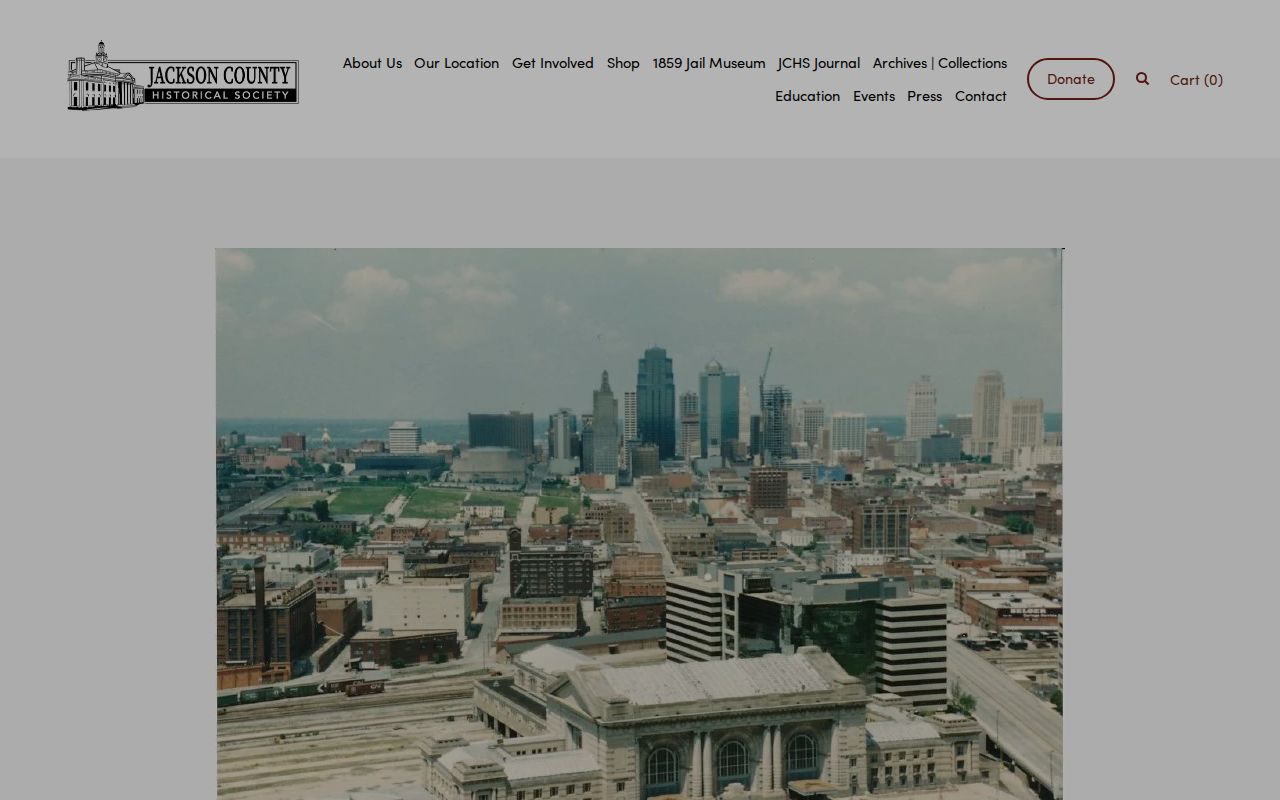
Whether the next step is a catalog search, branch reader, microform loan, library database, appointment, phone call, mail request, or archives inquiry, cite the repository and the access route with the result.